How often should you clean gutters in Georgia?
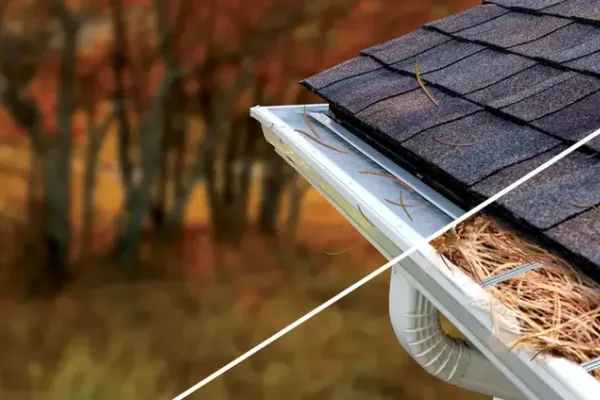
Here is the short answer, from a crew that hand-cleans gutters across Cumming and north Atlanta all year. Most Georgia homes need their gutters cleaned twice a year, once in late fall after the oaks finish dropping and once in spring after the pine pollen and seed pods settle. Homes under heavy pine, oak, or sweet gum cover often need a third visit, and a few need four. Our tree canopy and long growing season are why gutters here fill faster than they do in cooler parts of the country. This guide walks through how often to clean, why pine straw makes north Georgia worse, the two windows that matter most, and when guards are worth it.
How often should you clean gutters in Georgia?
Twice a year is the baseline for most Georgia homes, and it is the honest answer we give when a Cumming or Alpharetta homeowner calls and asks. One cleaning in late fall, after the oaks have let go of their leaves, and one in spring, after the pine pollen and seed pods have settled. That schedule keeps water moving through the system during the two seasons when it matters most.
The catch is that plenty of north Georgia homes need more than two. Here is how it usually breaks down by what is growing around the house.
| Tree cover around the home | Cleanings per year | Why |
|---|---|---|
| Light, mostly open lot | 1 to 2 | Little steady debris, mostly spring pollen and a light fall drop |
| Moderate hardwoods | 2 | Fall leaf load plus a spring clean-out |
| Heavy oak, hickory, sweet gum | 2 to 3 | Big fall drop, plus nuts and seed balls that jam downspouts |
| Mature pines near the roof | 3 | Needles drop across most of the year, not in one wave |
| Dense mixed canopy, creek lots | 3 to 4 | Constant debris from several species at once |
If your home sits under the kind of canopy that shades most of Forsyth County and north Fulton, treat three cleanings a year as normal rather than excessive. You can see what each visit costs on our pricing page, or get a number for your exact home with a free estimate.
Why north Georgia is harder on gutters than most places
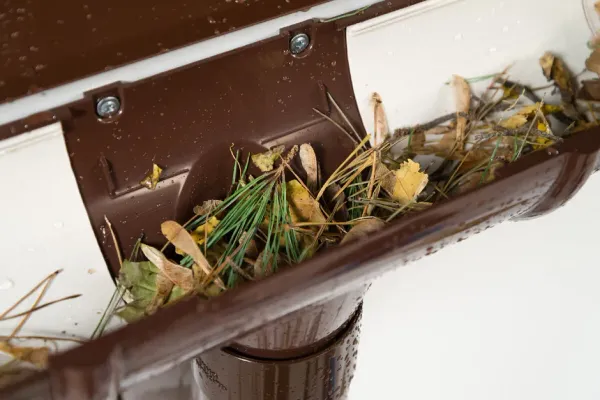
National gutter advice usually says clean twice a year and leave it there. That advice was written for places with a short leaf season and a hard winter that shuts the trees down for months. North Georgia does not work that way, and following the generic rule is how homeowners here end up with overflow.
A few local realities stack the deck against your gutters:
- A long growing season. Trees around Atlanta leaf out early and hold on late, so debris falls across more of the calendar than it does up north.
- Three heavy hitters at once. Water oaks and willow oaks drop leaves well into winter, sweet gums add spiky seed balls that wedge in downspout elbows, and loblolly pines shed needles nearly all year.
- Red clay grit. North Georgia clay and the granules that wash off aging shingles settle into the bottom of the gutter as a heavy sludge that is denser than leaves and slower to scoop out.
- Hard summer storms. The afternoon thunderstorms that roll through in July and August dump a lot of water fast, and a half-clogged gutter cannot move it, so it sheets over the edge against the foundation.
Put those together and a gutter that might last a full year in a cooler climate can fill in a single season here. That is the whole reason we price and schedule by home size and tree cover instead of quoting one flat regional rule.
Pine straw is the north Georgia wildcard
The single most common question we get is some version of the pine-straw question: do pine needles really clog gutters, and how often should you clean with pines around the house? The answer is yes, they clog badly, and pines change the whole schedule.
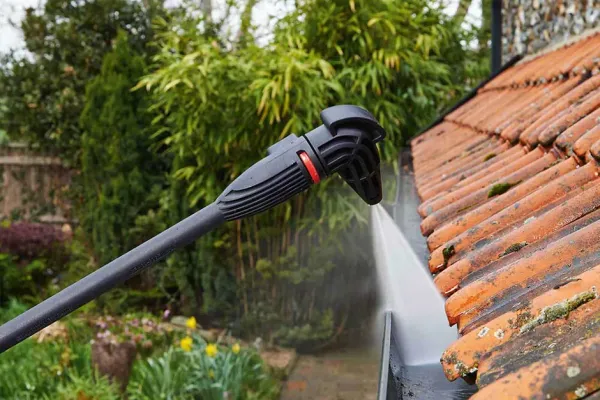
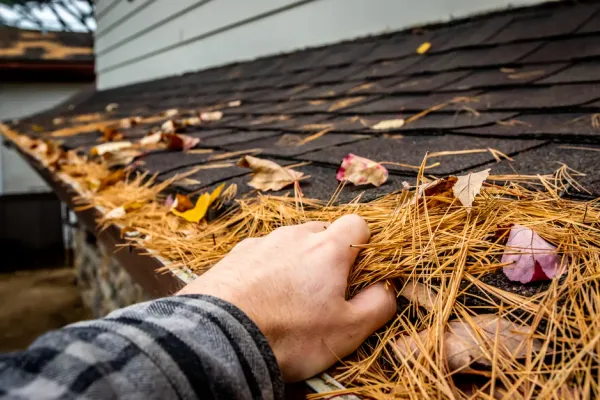
Loblolly and shortleaf pines, the ones all over Cumming, Roswell, and the older north Fulton subdivisions, do not drop all at once the way an oak does. They shed a steady trickle of needles across spring, summer, and fall. Those needles are the problem child of gutter debris for three reasons:
- They are small enough to slip through screen guards and even some mesh.
- They weave together into a felt-like mat that traps everything else.
- Mixed with spring pollen and shingle grit, that mat turns into a water-holding plug.
A home with mature pines close to the roof almost always needs three cleanings a year rather than two: spring after the pollen, mid to late summer to pull the accumulated needles, and late fall with the hardwood leaves. A heavily shaded pine lot can push that to four. If you have pines and you are only cleaning once a year, the gutters are almost certainly holding a needle mat right now. Our maintenance schedule guide lays out what to do month by month.
The two windows that matter: fall and spring
If you only clean twice, get the timing right and those two visits do most of the work. The two windows that matter in Georgia are late fall and mid-spring.
Late fall, mid-November into early December. This is the most important cleaning of the year for most homes. Wait until the oaks have dropped the bulk of their leaves, then clear everything before winter rain and the occasional freeze arrive. Cleaning in October usually backfires, because the heavy oak drop is still coming and you will just fill up again.
Spring, March into May. Georgia's yellow pine pollen coats everything, settles into the gutters, and binds with seed pods and samaras into a dense mat that holds water. A spring cleaning clears that out before the summer thunderstorms test your drainage. The sweet spot is late April into May, once the pollen has visibly slowed and cars stay clean for more than a day.
Between those two, watch after any big storm. A single system can drop enough twigs and leaves to plug a downspout, and storm debris behaves differently than the steady seasonal kind. If you want the reasoning behind each month, we break it down in our seasonal maintenance schedule.
Storm season and the overflow risk
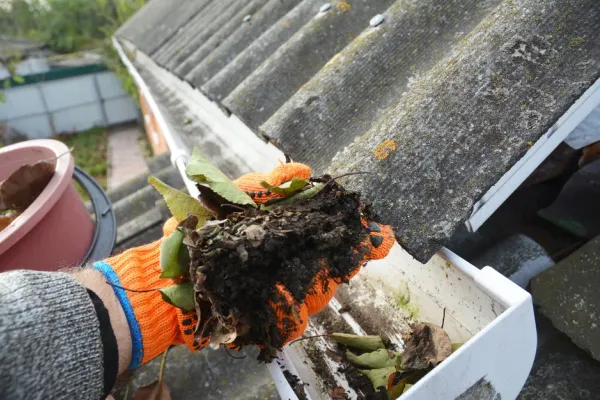
The reason frequency matters so much here is not just tidiness. It is what a clogged gutter does during a Georgia storm. When an afternoon thunderstorm drops two inches of rain in half an hour, your gutters have one job, which is to carry that water to the downspouts and away from the house. A gutter packed with a wet leaf-and-needle mat cannot do it, so the water goes over the edge.
That overflow lands right at the foundation, and on north Georgia red clay it does real damage:
- Water pooling against the footing can lead to settling and cracks.
- Saturated soil finds its way into crawl spaces and basements.
- Constant overflow rots the fascia board behind the gutter and soaks the soffit.
None of that is dramatic in the moment. It shows up months later as a musty basement or a soft board that needs replacing. Staying on a sensible cleaning schedule is far cheaper than one water-damage repair. If your gutters overflow in an ordinary rain, that is the system telling you it is overdue, and it is worth a quick gutter inspection to catch any damage early.
A frequency guide by home and tree cover
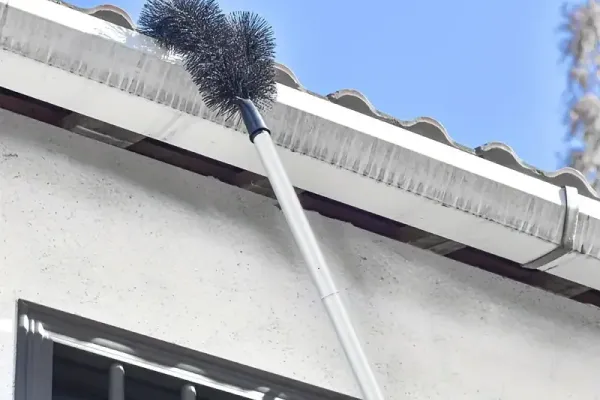
Every property is a little different, but after years of cleaning gutters across Forsyth County and north Fulton, most homes fall into one of a few patterns. Use this as a starting point, then adjust for how close the trees sit to the roof.
| Home and setting | Suggested schedule |
|---|---|
| Open lot, few trees | Spring and late fall |
| Moderate hardwoods | Spring, late fall, spot-check after storms |
| Heavy oak and sweet gum | Spring, October, late November |
| Mature pines near the house | Spring, mid-summer, late fall |
| Dense canopy or creek lot | Spring, summer, October, late November |
A couple of signs tell you that you are off schedule and should not wait for the calendar:
- You can see debris packed in the gutters from the ground.
- Water sheets over the edge during a normal rain.
- A downspout runs slow or backs up.
- Plants or seedlings are sprouting in the gutter.
Homeowners who clean on a set schedule also pay less per visit with us, from 10 percent off for a twice-a-year plan up to 25 percent off for monthly service. The cost guide has the full breakdown of rates and recurring discounts.
When gutter guards make sense in Georgia
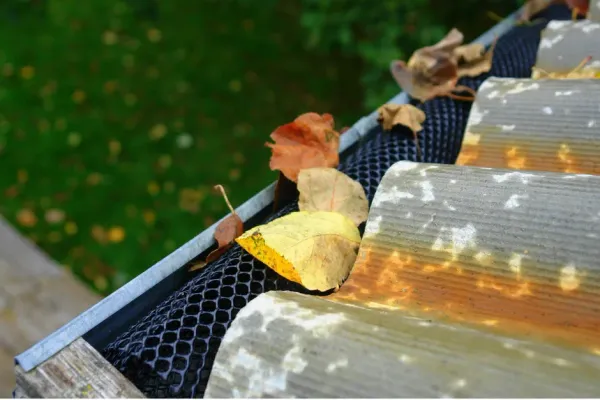
If your home needs three or four cleanings a year, it is fair to ask whether guards can bring that down. Sometimes they can. Guards are worth pricing out, not an automatic yes, and the honest version is that they reduce cleaning frequency without ending it.
Here is how the choice usually shakes out in our climate:
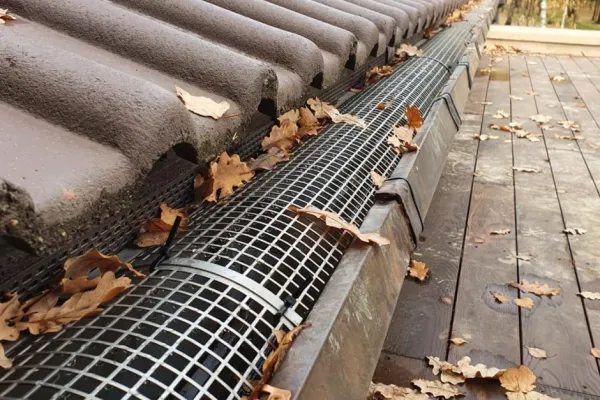
- Fine micro-mesh handles pine needles and pollen the most reliably, which matters most in Georgia. It costs the most and still needs an annual check.
- Standard screens keep out big oak leaves but let needles and pollen through, so under heavy pines they help less than the sales pitch claims.
- Foam and brush inserts are cheap and collect debris rather than shedding it, so we rarely recommend them here.
Guards run 8 to 9.50 dollars a linear foot installed with us, depending on the system. Under heavy pine and oak, good guards can take a home from three cleanings a year down to about one lighter maintenance visit, so the math tends to favor them on tall, shaded, or hard-to-reach homes. On a low, lightly wooded home, paying per cleaning often costs less over time. A quick inspection is the best way to see whether your roofline is a good fit before you spend on a full run.
Getting your home on a schedule
The right frequency for your home comes down to two things: how big the roof is and how much tree cover hangs over it. Twice a year is the floor for most of Georgia, three times is normal under heavy canopy, and pines are what usually push a home to that third or fourth visit.
If you would rather not track it yourself, we can put you on a recurring plan and handle the calendar, showing up in spring and late fall without you having to call. As part of the AlexUS Service family, we clean gutters for homeowners across metro Atlanta, from Cumming and Alpharetta down through the north side of the city.
- Check our full rate sheet on the pricing page
- Get a same-minute figure with a free estimate
- See what a cleaning includes on our services page
However often your home needs it, you will know the price and the plan before we start.

How often to clean gutters in Georgia, answered
The questions north Georgia homeowners ask us most about timing and frequency.
How often should you clean gutters in Georgia?
Most Georgia homes need gutter cleaning twice a year, once in late fall after the oaks finish dropping and once in spring after pine pollen and seed pods settle. Homes under heavy pine, oak, or sweet gum cover often need a third visit, and lots near creeks or dense woods sometimes need four. Our long growing season and hard summer storms are why gutters here fill faster than in cooler regions.
Do pine needles clog gutters?
Yes, badly. Pine needles are small and slip past most guards, then weave together into a dense mat that holds water and blocks flow. Mixed with pollen and shingle grit they pack into a plug that overflows in a storm. Homes under loblolly and shortleaf pines, which is most of Forsyth County and north Fulton, deal with needle buildup almost year-round rather than in one fall drop.
How often should you clean gutters with pine trees?
Plan on three cleanings a year with mature pines close to the house: spring after pollen, mid to late summer for the steady needle drop, and late fall with the hardwood leaves. Pines shed a little in every season instead of dumping all at once, so the debris never really stops. A heavily shaded pine lot can push that to four visits.
How often should you clean gutters with a lot of trees?
Under heavy hardwood and pine canopy, two cleanings a year is the floor and three is more realistic. Oaks, hickories, and sweet gums drop leaves, nuts, and seed balls, and pines add needles between drops. If you can see debris packed in the gutters from the ground, or water sheets over the edge in a normal rain, you are past due.
When is the best time of year to clean gutters in Georgia?
Two windows matter most. Late fall, from about mid-November into early December, once the oaks have finished dropping, and spring, roughly March into May, after the yellow pine pollen and seed pods settle. Cleaning too early in fall means a second fill before winter, so it usually pays to wait until most of the leaves are down.
Do I need gutter guards in Georgia?
Guards are worth pricing out, not an automatic yes. They cut how often you need a full cleaning, which adds up under heavy tree cover, but they still need an annual check and removal for a deep clean, so they are not maintenance-free. Fine micro-mesh handles our pine needles and pollen best. Guards pay off fastest on tall, hard-to-reach, or heavily shaded homes.
Want a schedule built for your home?
Not sure how often your home really needs it? Tell us your home size and tree cover and we will give you a flat rate and a sensible schedule, no sales pressure. Get a figure online in about a minute, or call (470) 748-6665.